
This applies to EC/ESS and TR/TRL members
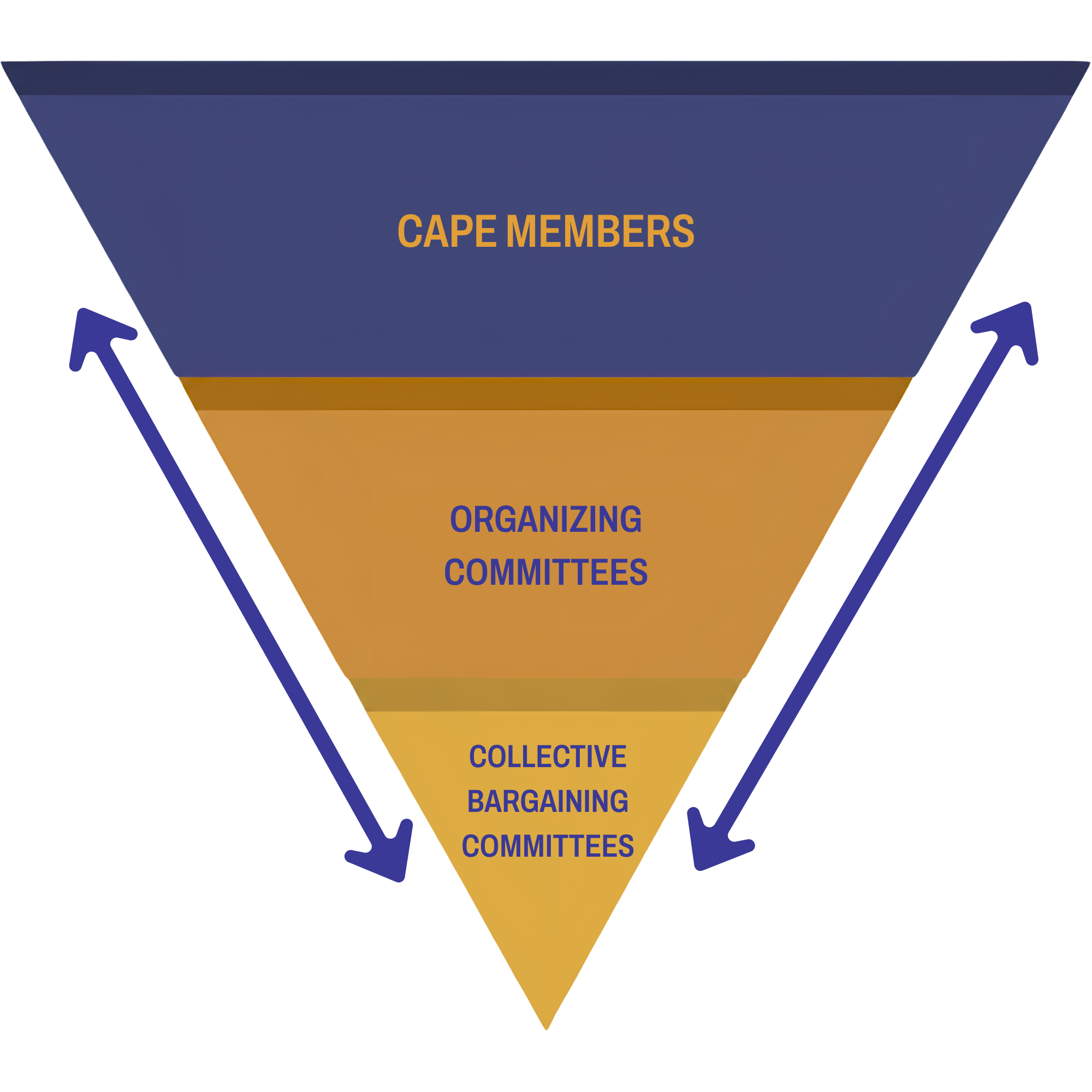
Bargaining is when you, as CAPE members, have the most power to determine the future of your workplaces and your working lives. You will need to get involved at your bargaining table in numbers never seen before and take full ownership of this campaign to be able to win what you and your co-workers urgently need.
Over the past months and years, CAPE members have built structured committees and member-led groups that facilitate and enable participation in open bargaining and ways for you to get involved in bargaining.
Members: The open bargaining process is transparent, inclusive, and grounded in solidarity among the members, across bargaining units, and with other unions. Members who are EC/ESS or TR/TRS in good standing can observe the negotiation sessions, participate in Article Committees (join here: EC/ESS, TR/TRL), and join your department’s Organizing Committee (join here: EC/ESS, TR/TRL). Find more info about open bargaining here.
Organizing Committees: These are made up of rank-and-file members who are frustrated with working conditions and who are unifying with their fellow members to change their working lives for the better from within the union. The goal is to organize majorities of members to build power in numbers to the point where the employer cannot ignore you. That’s what union power always is. Through Organizing Committees, you will help reach out to your co-workers about bargaining issues and what’s going on at the negotiating table. Organizers engage directly with the EC and TR Collective Bargaining Committees to build power, inform strategy, and consult on next steps. Be sure to talk to your coworkers in your department and get others signed up as well.
Collective Bargaining Committees: These members work in unity through solidarity, not as ‘representatives’ of other members. This round, or the first time in CAPE’s history, the CBCs were voted in through an election process at every department. The CBCs were responsible for reviewing member survey results to draft bargaining priorities, proposing a broad platform mandate for the proposal package, recommending a dispute resolution mechanism for this round of negotiations, and holding a democratic vote to ratify those platforms and the dispute mechanism. The CBCs prepared for open bargaining in training sessions and have struck subcommittees of members to decide how major articles of the collective agreement should be changed. Throughout bargaining, the CBCs will communicate updates and share a proposal tracker with members with the help of CAPE staff. With members at the table, and in conjunction with member involvement in organizing committees, consensus decisions are communicated to members as they are made.
These are the members on the EC/ESS CBC, representing all departments and relevant caucuses.
These are the members on the TR/TRL CBC, representing all translation and interpreter members.
You are not a bystander waiting to hear what a third party decided for you. You are part of deciding whether this round takes on the issues that are already reshaping your life: cuts, WFA pressure, contracting out, RTO, AI, burnout, side jobs, stagnating pay, accommodations, and the erosion of public-service standards.